(310) 530-7011 Contact Us

Follow Us

7 Dental Technology Trends and Buying Tips

Dental technology is moving from the laboratory into everyday operatories. Digital scanners, artificial intelligence, 3D printers, guided surgery, and cloud-based imaging now influence diagnosis and treatment planning. The World Health Organization’s Global Oral Health Status Report (2022) estimates that nearly 3.5 billion people live with oral diseases. That scale creates pressure for faster, more accessible, and more predictable care.

These changes explain the growing interest in dental technology trends. Dr. Christian Coachman, a recognized pioneer in Digital Smile Design, has said, “Digital dentistry is not the future; it is the present.” His statement is persuasive, but it needs careful interpretation. A new device does not automatically improve clinical outcomes. Training, workflow compatibility, cybersecurity, maintenance, and patient communication still matter.

The American Dental Association’s Health Policy Institute continues to track technology adoption, practice investment, and workforce pressures across dentistry. Meanwhile, industry analyses from Fortune Business Insights and MarketsandMarkets project continued growth in digital dentistry and dental 3D printing. Their forecasts suggest momentum, not guaranteed value. Market predictions can age badly.

This guide examines seven practical dental technology trends and offers buying tips for evaluating them. Each section connects product features with chairside realities, such as scanning a wet molar, exporting an open file, or repairing a printer before Monday’s patients arrive. The strongest purchase may not be the most advanced one. Sometimes, it is the system your team can use consistently, measure honestly, and explain clearly to patients.
7 Dental Technology Trends and Buying Tips

Understanding the Role of Technology in Modern Dental Care

7 Dental Technology Trends and Buying Tips

Understanding the Role of Technology in Modern Dental Care

Modern dental care relies on technology for more than faster appointments. Digital X-rays can reduce exposure and reveal details traditional images may miss. Intraoral scanners create comfortable, precise impressions without unpleasant trays. Computer-aided design supports clearer treatment planning and customized restorations. Three-dimensional printing can produce models, guides, and temporary appliances efficiently. Artificial intelligence may help identify patterns, but it should not replace professional judgment. Teledentistry also improves access when an in-person visit is not immediately possible. Laser systems offer another option for selected soft-tissue procedures.

Technology works best when it serves a clinical need. A busy practice may value efficient scanning, while a surgical clinic may need accurate three-dimensional imaging. Before buying, dentists should check image quality, software compatibility, maintenance requirements, and staff training. Data protection matters too. Patient records require secure storage, controlled access, and reliable backups. Ask for independent evidence, not only sales demonstrations.

The lowest purchase price can become expensive later. Consider consumables, updates, repairs, and integration costs. Staff should test the equipment during realistic workflows. That reveals awkward controls and hidden delays. It is easy to confuse impressive features with useful performance. I have seen advanced systems underused because training was rushed. That mistake deserves honest review. Technology should improve diagnosis, communication, comfort, or safety in a measurable way. Otherwise, it may simply add another screen to the operatory.

Key Dental Technology Trends Shaping Clinical Practice

Dental technology is reshaping clinical practice through faster diagnosis, clearer communication, and more precise treatment planning. Digital impressions can reduce patient discomfort and improve the fit of restorations. Three-dimensional imaging helps clinicians study anatomy from multiple angles before treatment begins. These tools support better decisions, but they do not replace clinical judgment or patient discussion.

Artificial intelligence is also entering image analysis and risk assessment. It may highlight suspicious areas that deserve closer inspection. However, software can miss context, especially when images are poor or symptoms are unusual. Experienced clinicians should verify every suggestion against the examination, medical history, and current evidence. Digital workflows can save time, yet staff training and data security remain essential. A smooth screen does not guarantee a smooth appointment.

Tips: Choose technology that solves a documented clinical problem. Ask about training, maintenance, integration, and data protection before purchasing. Request a realistic demonstration using ordinary cases, not only perfect examples. Measure results after several months, including chair time, remakes, patient understanding, and staff workload. No system is flawless. Teams should review unexpected outcomes and adjust their workflow instead of blaming the operator or the software.

How to Evaluate Dental Technology for Your Practice

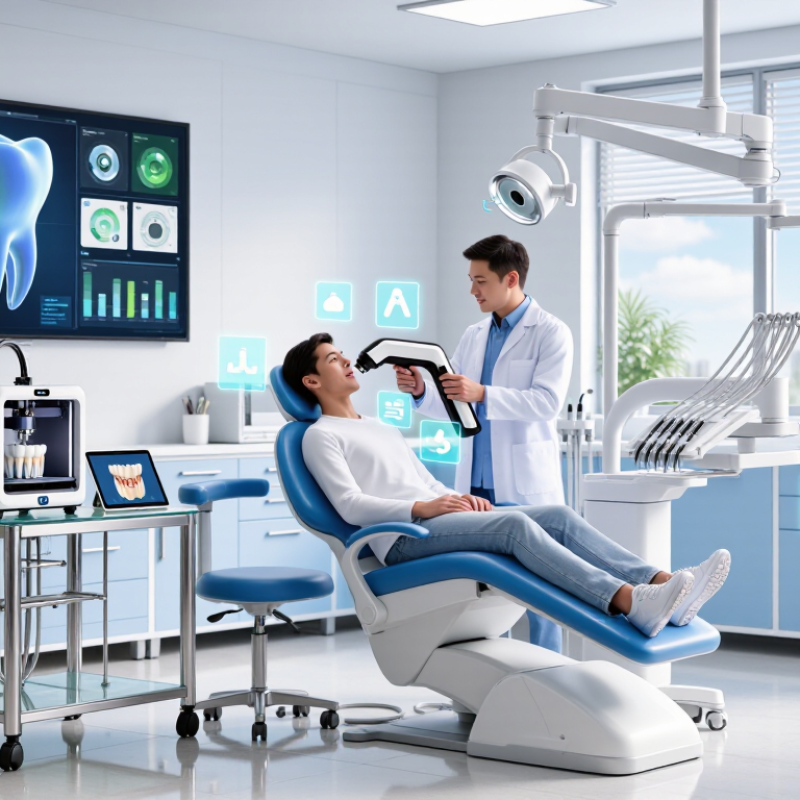
Dental technology now includes intraoral scanners, 3D imaging, artificial intelligence, CAD/CAM, 3D printing, teledentistry, and cloud-based records.

The World Health Organization estimates that oral diseases affect nearly 3.5 billion people worldwide. That scale raises an important question:

does a device improve diagnosis, access, or chairside efficiency?

Evaluate the workflow before the specification sheet.

Time one complete patient visit. Measure scanning speed, retakes, sterilization steps, and staff training hours. Test it live. Request peer-reviewed evidence, not only supplier demonstrations.

Check image quality, export formats, software updates, and integration with your existing records. Interoperability often matters more than a sharper screen.

Budget beyond purchase price.

CMS National Health Expenditure data placed United States dental spending near 175 billion dollars in 2023, showing a large and competitive care market. Calculate maintenance, subscriptions, calibration, repairs, and disposable materials.

Ask whether the technology reduces remakes or creates another monthly obligation.

Review encryption, user permissions, backups, and data retention with your compliance advisor.

A 2024 systematic review in the Journal of Dentistry found that artificial intelligence can support image interpretation, but performance varies across datasets and clinical settings. That limitation matters.

No tool replaces clinical judgment.

My own buying mistake would be trusting impressive demonstrations without testing ordinary cases, rushed appointments, and reluctant users.

Essential Buying Factors: Cost, Compatibility, and Training

7 Dental Technology Trends and Buying Tips

Dental technology now includes AI-assisted imaging, intraoral scanners, cloud records, 3D printing, digital radiography, CAD/CAM workflows, and surgical navigation. Yet technology trends can distract from basic purchasing discipline. The CMS National Health Expenditure Report recorded about $165 billion in United States dental spending in 2023. Clinics should calculate the total cost, not only the invoice price. Include software subscriptions, calibration, repairs, consumables, data storage, and staff time. Cheap equipment can become expensive after repeated downtime.

Compatibility deserves equal attention. Ask whether the system exports DICOM files and connects with existing practice software. Confirm integration before signing. Request a live test using your current imaging files. Check file ownership, backup procedures, cybersecurity controls, and offline access. The WHO Global Oral Health Status Report estimates that nearly 3.5 billion people live with oral diseases, increasing pressure for efficient, connected care. Still, integration claims may sound better than daily reality. Test the workflow with a receptionist, assistant, and clinician.

Training is an operating cost. A short demonstration is not enough. Require role-based training, recorded sessions, and a clear support response time. Track scanning errors, retakes, and appointment delays during the first month. The ADA Health Policy Institute has repeatedly identified staffing and operational pressures as major concerns for dental practices. Training reduces those pressures, but only when refreshed. I would budget for follow-up coaching. That part is often underestimated.

Planning a Practical Technology Adoption Strategy

7 Dental Technology Trends and Buying Tips

Planning a Practical Technology Adoption Strategy

Dental technology works best when it solves a measured clinical problem. Current trends include digital imaging, intraoral scanning, chairside manufacturing, artificial intelligence, cloud records, 3D printing, and remote monitoring. However, a modern device can still create delays if staff cannot use it confidently.

Start with one workflow. A practice might pilot an intraoral scanner for crown cases over four weeks. Track scanning time, remakes, patient acceptance, and training questions. Ask the team where the process feels slower. Real experience matters more than a polished demonstration.

Review interoperability before purchase. Confirm whether the system exchanges files with existing imaging, scheduling, and laboratory software. Check applicable regulatory clearance, cybersecurity controls, warranty terms, service response, and data export options. Calculate the full cost, including installation, subscriptions, consumables, maintenance, and staff training.

Do not buy every trend.

A small pilot reveals more than a sales presentation. We once underestimated appointment disruption during training; that mistake changed our rollout schedule. Practices should also define success before signing a contract. For example, set a target for fewer retakes or shorter laboratory turnaround times. Reassess after ninety days, then expand only when clinical results, staff confidence, and patient experience support the decision.

7 Dental Technology Trends and Buying Tips: Planning a Practical Technology Adoption Strategy

Typical dimensional ranges can help dental practices compare technologies using a practical, measurable buying criterion. Lower values indicate finer spatial detail, but clinical workflow, software compatibility, training, maintenance, and regulatory requirements should also be evaluated.

Ranges shown are typical published specification ranges for non-brand-specific dental devices. Actual performance varies by device, scanning protocol, acquisition settings, materials, and clinical conditions.

Skip footer

Join our dental family today.

Torrance DentistryDr. Steve & Daniel Yabuno

Address

3500 Lomita Blvd #103
Torrance, CA 90505

Opening Hours

  • Monday: 8:00 am - 5:30 pm
  • Tuesday: 8:00 am - 5:30 pm
  • Wednesday: 8:00 am - 5:30 pm
  • Thursday: 8:00 am - 5:30 pm
  • Friday: 8:00 am - 2:00 pm
  • Saturday: 8:00 am - 2:00 pm

Phone

(310) 530-7011

Follow Us