China Top 10 Dental Anxiety Management Products?
Dental anxiety can turn a routine cleaning into a tense, exhausting experience. The sound of a turbine, bright operatory lights, and uncertainty about pain may increase fear before treatment begins. This guide explores China’s top 10 dental anxiety management products, focusing on practical tools used before and during dental visits.
The selection includes noise-reducing headphones, calming sensory aids, virtual reality headsets, communication cards, relaxation devices, and dentist-approved topical products. Each item should be evaluated through safety information, clinical relevance, user comfort, and product quality. A helpful product must fit the patient, procedure, and clinical setting. It should not replace professional assessment or appropriate dental care.
Evidence matters here. Dental professionals can explain whether a product is suitable for children, older adults, pregnant patients, or people with medical conditions. Buyers should check ingredients, manufacturer details, instructions, after-sales support, and applicable Chinese regulatory information. A low price does not prove reliability. Neither does attractive packaging.
No ranking is perfect. Patient responses differ widely. One person may relax with soft music, while another may dislike wearing headphones during treatment. Some products have limited independent research, which deserves honest attention. This article therefore compares practical strengths and limitations, rather than promising complete fear relief. Used thoughtfully, dental anxiety management products may support clearer communication, steadier breathing, and a more comfortable dental experience. The dentist remains central.
What Is Dental Anxiety and Why Does It Matter?
China Top 10 Dental Anxiety Management Products?
What Is Dental Anxiety and Why Does It Matter?
Dental anxiety is persistent fear, tension, or avoidance linked to dental care. It may begin with a painful appointment, frightening stories, or the sound of a dental drill. A systematic review in Community Dentistry and Oral Epidemiology reported that dental fear affects roughly 10% to 20% of adults, although estimates vary by country and measurement method. That variation matters. Anxiety is not always visible in the waiting room.
The World Health Organization’s Global Oral Health Status Report 2022 estimated that nearly 3.5 billion people live with oral diseases. Delayed visits can allow small cavities to become painful infections. In practice, patients may grip the chair, breathe quickly, or postpone treatment for months. Management products can help, but they cannot replace professional assessment. Useful options include calming audio devices, breathing aids, stress balls, weighted lap pads, visual distraction tools, and topical comfort products selected by dental professionals. Their value depends on the person, procedure, and clinical setting.
Evidence supports communication, control, and gradual exposure more strongly than any single product. A patient who can pause treatment may feel safer. However, product claims are sometimes ahead of research. I have seen comfort tools help one patient and irritate another. That is an important limitation. Dentists should ask about previous experiences, explain each step, and check consent throughout treatment. Safety, accessibility, and hygiene should guide every purchase.
How Are Dental Anxiety Management Products Classified?
Dental Anxiety Management Products in China: How Are They Classified?
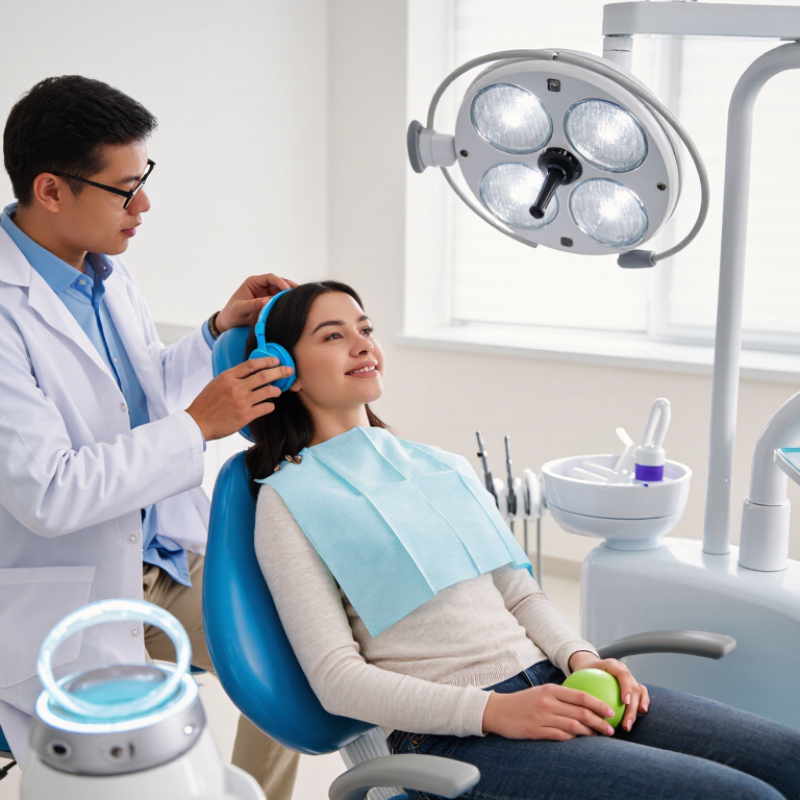
Dental anxiety management products are usually classified by their purpose, not simply by popularity. This approach helps dental teams match tools with a patient’s age, symptoms, medical history, and treatment plan. The first group includes sensory distraction products, such as headphones, visual screens, and calming audio devices. They reduce attention to drilling sounds, bright lights, or unfamiliar movements. Small details matter. A comfortable fit can change the patient’s experience.
A second group includes communication and comfort products. Visual treatment cards, hand signals, adjustable cushions, and protective eyewear can give patients a stronger sense of control. These tools are especially useful for children, people with previous negative experiences, and patients with communication difficulties. Dentists may also classify products by use setting, including home preparation, waiting-room support, and chairside care. Evidence should guide selection. Marketing language alone is not enough.
A separate category covers clinically supervised anxiety-control methods. These may involve monitored inhalation or other professional interventions, depending on local rules and the patient’s health assessment. They should never be treated as ordinary consumer products. Qualified dental professionals must review risks, consent, monitoring needs, and emergency readiness. The categories often overlap. A child may use headphones, a visual schedule, and clinical support together. No classification is perfect. Patient response can be unpredictable, and one widely praised tool may fail in a real appointment. Regular feedback and careful documentation remain necessary.
| Rank | Product or Product Type | Product Classification | Primary Anxiety-Management Function | Typical Dental Use | Evidence and Practical Value | Important Considerations |
|---|---|---|---|---|---|---|
| 1 | Nitrous Oxide–Oxygen Sedation System | Inhalation sedation | Produces relaxation and reduces fear while usually preserving verbal communication and protective reflexes. | Commonly used for anxious adults, children, needle fear, lengthy procedures, or a strong gag reflex. | Well-established dental sedation method with rapid onset and recovery. The patient generally remains conscious and responsive. | Requires trained clinical staff, appropriate scavenging, medical screening, and continuous observation. It is not suitable for every respiratory or medical condition. |
| 2 | Oral Anxiolytic Medication | Pharmacological management | Reduces anticipatory anxiety and produces mild to moderate sedation before or during dental treatment. | Often considered for severe appointment-related anxiety when behavioral techniques alone are insufficient. | Oral benzodiazepines are used in some dental protocols and can be effective when prescribed and monitored appropriately. | Requires an individualized prescription, medical history review, consent, escort arrangements, and restrictions on driving or alcohol use. |
| 3 | Cognitive Behavioral Therapy Digital Program | Behavioral support | Targets catastrophic thoughts, avoidance behavior, fear conditioning, and stress responses through structured exercises. | Used before appointments or as part of a longer-term plan for dental phobia and recurrent avoidance. | Cognitive behavioral therapy has strong support for specific phobias; digital delivery can improve access when professionally guided. | Best results usually require repeated practice. Severe phobia may need assessment by a qualified mental-health professional. |
| 4 | Virtual-Reality Distraction Headset | Immersive distraction | Redirects attention away from dental sights, sounds, and procedural sensations. | Used during injections, prophylaxis, restorative procedures, and other treatments where communication can be maintained. | Clinical studies indicate that immersive distraction may reduce perceived pain and anxiety, particularly in children and adolescents. | The patient must still be able to hear essential instructions. Content, hygiene, fit, motion sensitivity, and equipment cleaning matter. |
| 5 | Noise-Reducing Headphones with Audio Control | Sensory modulation | Reduces exposure to high-frequency dental sounds and provides calming music or guided breathing audio. | Useful for patients who are especially sensitive to handpiece noise, suction sounds, or general clinic noise. | Music and sound masking are low-risk adjuncts that may reduce self-reported anxiety and improve perceived comfort. | Noise reduction must not prevent communication or safety instructions. Headphones should be cleaned between users. |
| 6 | Guided Breathing and Biofeedback Device | Physiological self-regulation | Encourages slow breathing and helps patients recognize or reduce stress-related physiological arousal. | Used in the waiting area, before local anesthesia, or during short treatment interruptions. | Controlled breathing is a recognized relaxation technique; biofeedback can make breathing practice more structured and measurable. | These devices complement, rather than replace, clinical assessment. They are not intended to diagnose anxiety disorders. |
| 7 | Visual Communication and Stop-Signal Kit | Communication aid | Restores the patient’s sense of control by providing a clear way to pause treatment or communicate discomfort. | Includes hand signals, illustrated procedure cards, written questions, and pre-agreed break instructions. | Tell–show–do, shared decision-making, and predictable communication are widely used behavioral techniques for reducing dental fear. | The stop signal should be agreed before treatment and respected consistently. It does not eliminate the need for informed consent. |
| 8 | Topical Oral Anesthetic Gel or Spray | Comfort-control adjunct | Reduces superficial mucosal sensation and may lessen fear of needle insertion or surface discomfort. | Applied before local anesthetic injection or selected minor oral procedures. | Topical anesthetics can reduce needle-entry discomfort, which may indirectly decrease procedure-related anxiety. | It does not treat psychological anxiety and cannot replace properly administered local anesthesia. Dose, allergies, age, and mucosal condition must be considered. |
| 9 | Computer-Controlled Local Anesthetic Delivery System | Injection-comfort technology | Controls injection flow and pressure to make local anesthetic administration more gradual and predictable. | Considered for patients whose anxiety is strongly linked to needles, pressure, or previous painful injections. | Some clinical research suggests that controlled-flow delivery can improve injection comfort in selected situations. | Operator technique remains important. The system does not provide sedation and should be used only by trained dental professionals. |
| 10 | Dental Sedation Monitoring and Oxygen-Safety Equipment | Safety and monitoring equipment | Supports safe administration of moderate or deeper sedation by tracking vital signs and enabling rapid response. | Used with selected pharmacological or inhalation sedation protocols in appropriately equipped clinical settings. | Pulse oximetry, blood-pressure monitoring, oxygen delivery, and other required equipment are central to responsible sedation practice. | These are safety products rather than anxiety treatments. Requirements depend on the sedation level, patient risk, and applicable local regulations. |
Note: Product selection should be based on the patient’s age, medical history, anxiety severity, treatment complexity, and local clinical regulations. Sedation and prescription medicines must be provided and monitored by appropriately qualified dental professionals.
Which Features Define Effective Dental Anxiety Products in China?
Effective dental anxiety products in China should do more than distract patients.
They need features that fit real clinic routines, patient age, and cultural expectations. Adjustable audio, guided breathing, soft lighting, and calming visual content can reduce stress before treatment begins. Mandarin and regional language options may improve understanding, especially for older patients. Simple controls matter. A frightened patient may not manage a complicated screen.
Clinical reliability is equally important.
Dental professionals should look for clear safety instructions, easy cleaning, comfortable materials, and compatibility with protective equipment. Products should support, not replace, communication between the dentist and patient. A hand signal, visible timer, or pause button can restore a sense of control. For digital tools, transparent data handling and lawful operation are essential. Evidence from supervised clinical use is more useful than attractive marketing claims. Some products may look impressive but create extra noise or delay.
Tips:
Test the product in a real treatment room. Check sound levels near the dental chair. Offer short sessions before procedures. Record patient feedback, including complaints. Do not assume every patient prefers technology. Some people need a quiet explanation, a trusted companion, or simply more time. An imperfect trial can still reveal practical problems, such as uncomfortable headphones or confusing instructions. Review those weaknesses honestly before wider adoption.
China’s Top 10 Dental Anxiety Management Product Categories
How Should Patients Choose and Use These Products Safely?
China Top 10 Dental Anxiety Management Products?
Choosing a dental anxiety product should begin with the patient’s medical history, not a product ranking. Useful options may include noise-reducing headphones, breathing guides, stress balls, weighted lap pads, eye masks, calming audio, visual distraction tools, cooling masks, topical anesthetics, and prescribed medication. However, comfort products support care. They do not replace a dental assessment.
Patients should ask a licensed dentist how each product fits their treatment. Never use oral sedatives without a prescription or combine them with alcohol, sleep aids, or other calming medicines. Topical anesthetics need careful dosing, especially for children, pregnant patients, and people with allergies. Follow the label exactly. More is not better. Some devices may interfere with communication, so the patient and dental team should agree on a stop signal before treatment.
Clean reusable items after every appointment. Check batteries, cords, and damaged surfaces. A weighted item may feel reassuring, but it should not restrict breathing or movement. I have found that simple preparation often works better than buying many products: arrive early, practice slow breathing, and explain specific fears clearly. Still, anxiety varies widely. A product that calms one patient may irritate another, so patients should review what helped and what failed after each visit.
China Top 10 Dental Anxiety Management Products
How should patients choose and use these products safely?
This chart compares commonly used product categories by their typical preparation or onset time. It is an educational comparison, not a sales ranking. Non-drug aids such as breathing tools, music, sunglasses, visual aids and virtual reality can usually be used immediately. Topical anesthetics generally require several minutes, while nitrous oxide and prescribed oral sedatives require professional assessment and supervision. Never use sedatives or inhalation equipment without a qualified dental professional.
Related Posts
-
Why Is Dental Anxiety Management Important?
-
2026 Best Dental Health Tips for a Healthy Smile
-
Top 10 Essential Dental Health Tips for a Brighter Smile?
-
How to Get a Healthy Smile Tips for Healthy Teeth?
-
Top Dental Health Awareness Tips for Healthy Teeth
-
How to Choose Smile Enhancement Products in 2026?
362 five star Google reviews
193 five star Yelp reviews